An honest, no-pressure comparison of hiring a professional painter vs. doing it yourself, real cost breakdowns, quality differences, time investment, safety, and the specific situations where each approach makes the most sense.
Every homeowner faces the same decision before a paint project: do I hire a professional, or do I do it myself? This is not a trick question with one right answer. The best choice genuinely depends on your project size, your skill level, how you value your time, the specific conditions of your home, and what quality result you need. Here is an honest breakdown of both options, including when DIY makes sense, when it does not, and how to think through the decision for your specific situation in Brevard County.
The Real Cost Comparison
Many homeowners assume DIY is dramatically cheaper. The reality is more nuanced. Here is a realistic cost breakdown for a typical 12×12 bedroom repaint:
| Item | DIY Cost | Professional Cost |
|---|---|---|
| Paint (2 gallons, quality product) | $70–$160 | Included in quote |
| Roller covers, brushes, tray | $30–$60 | Included |
| Drop cloths, masking tape, plastic sheeting | $20–$40 | Included |
| Sandpaper, spackle, caulk | $20–$40 | Included |
| Primer (if needed) | $20–$50 | Included |
| Labor | $0 (your time) | $280–$500 |
| Total out-of-pocket | $160–$350 | $380–$650 |
For a single bedroom, the out-of-pocket savings from DIY are real but modest, roughly $200–$300. The key question is how you value 8–12 hours of your own time (accounting for supply runs, prep, painting, drying time between coats, and cleanup). If your time has economic value, a freelancer, business owner, or anyone with more demand for their time than available hours, the calculation often shifts toward hiring a professional even for smaller projects.
For larger projects, the math changes substantially. A 2,000 square foot whole-home interior repaint might cost a DIYer $600–$1,200 in materials but consume 80–120+ hours of personal labor across 4–6 weekends. The professional quote for the same project typically runs $4,500–$7,000 but is completed in 3–5 days.
When DIY Painting Makes Sense
Small, Simple Projects
A single accent wall, one small bedroom, or refreshing a half-bath are reasonable DIY projects for someone with basic painting skills and patience. Small rooms are forgiving, mistakes are easier to correct, the total material investment is low, and the consequences of imperfect results are limited to one contained space. If you paint it and do not love the result, repainting a 10×10 bedroom is not a significant investment.
You Have Genuine Painting Experience
If you have successfully painted rooms before and can produce clean cut-in lines (the precise edge where wall meets trim or ceiling), apply roller coats without lap marks, and properly prepare surfaces, your results can look professional on straightforward projects. The techniques are learnable, but consistent, professional-quality results on complex spaces require practice that most homeowners do not accumulate quickly.
You Have the Time and Can Work Without Pressure
DIY painting on a relaxed timeline, a slow weekend project without a deadline, is a different proposition than DIY with a time constraint. If you have 2–3 open weekends and no urgency (not selling, not expecting company, not on a renovation schedule), a small DIY paint project is reasonable. Rushed DIY produces the worst results and eliminates most of the cost savings through wasted materials and having to fix mistakes.
When to Hire a Professional Painter
Large or Multi-Room Projects
The math fundamentally changes when a project grows beyond one or two rooms. Painting an entire home's interior requires consistent energy, focus, and technique across many rooms, and the cumulative fatigue of DIY painting usually shows in the quality of the last few rooms compared to the first ones. A professional crew of 3–4 painters can complete a 2,000 square foot interior in 4–5 days. The same project done solo on weekends would realistically take 6–10 weeks.
All Exterior Painting
Exterior painting is qualitatively different from interior work and is not recommended as a DIY project for most homeowners. Working on ladders at heights of 10–20 feet on uneven terrain, in Florida's summer heat, creates genuine fall and injury risk. Professional exterior painters carry workers' compensation insurance precisely because this work is hazardous. Beyond safety, exterior painting requires specific knowledge of surface preparation for Florida's CBS stucco construction, mildew treatment protocols, proper caulking techniques, and paint systems appropriate for the UV and humidity exposure of the Space Coast.
High Ceilings, Stairwells, and Complex Spaces
Two-story foyers, stairwells, vaulted ceilings, and any space requiring scaffolding or extension ladder setups above standard reach are outside the safe capability of most homeowners. Without proper equipment and training, working at height is dangerous. Professionals have the scaffolding, multi-position ladders, and airless sprayer equipment needed to handle these spaces efficiently and safely.
Pre-Sale Painting
If you are repainting before listing your home for sale, the quality of the finish matters far more than in other contexts. Real estate professionals and buyers notice imprecise cut-in edges, uneven roller texture, missed spots, and touch-up mismatches. A professionally executed paint job before listing consistently contributes to faster sales and better buyer perception. The cost of professional painting before a sale is generally well justified by the return.
Older Homes with Problem Surfaces
Homes built before 1978 may have lead-based paint on surfaces, which requires specific precautions, proper disposal procedures, and potentially professional lead-safe certification for any work that disturbs the surface. Homes with extensive surface damage, significant drywall repairs, wallpaper requiring removal, or stucco cracks requiring patching need the expertise and equipment that professional painters and surface prep specialists bring to the job.
Cabinet Refinishing
Kitchen and bathroom cabinet refinishing is one of the most technically demanding painting projects a homeowner can attempt DIY. Achieving a factory-smooth finish on cabinet doors requires specific spray equipment, proper primer, sanding between coats, and experience with cabinet-specific paint products. DIY cabinet refinishing attempts frequently result in visible brush marks, drips, and finish issues that require professional correction, often at a higher total cost than simply hiring a professional from the start.
Quality Differences You Will Actually Notice
The most visible quality differences between professional and DIY painting are consistent across projects:
- Cut-in edges: The clean line where wall paint meets trim, ceiling, or an adjacent wall is the hardest interior painting technique to execute well. Professional painters achieve this with speed and consistency. Amateur cut-in lines are the single most visible quality indicator in any interior paint job.
- Surface preparation: Professionals fill holes properly, sand rough areas flush, and prime as needed before topcoat application. Many DIYers skip or minimize prep steps, and paint applied over poorly prepared surfaces fails faster and looks worse immediately.
- Coverage consistency: Even roller application without lap marks, thin spots, or variation in sheen across the wall surface requires the right roller nap for the surface texture, correct paint viscosity, and consistent technique. These variables are second nature to experienced painters and are genuinely difficult for beginners to control.
- Trim and detail work: Clean, consistent brush strokes on door frames, baseboards, window casings, and crown molding require brush control that comes with practice. Sloppy trim work undercuts an otherwise decent paint job.
Equipment: What Professionals Have That Most DIYers Do Not
Professional painters invest significantly in equipment that most homeowners do not own and should not buy for occasional use: commercial airless sprayers (for cabinets, exterior siding, and large open walls), pump-up garden sprayers modified for paint, high-capacity roller frames and extension poles, commercial drop cloths, multi-position ladders and scaffolding, and professional-grade masking systems. Renting this equipment for a one-time project adds cost and learning curve to DIY projects where it would be needed.
The Hidden Cost of DIY Problems
When DIY painting goes wrong, paint drips on hardwood floors, uneven coverage requiring complete re-coating, paint on carpet from inadequate protection, poor adhesion from skipped prep steps, or mismatched colors requiring multiple corrective coats, fixing the problem almost always costs more than hiring a professional initially would have. Factor this downside risk realistically when making the decision.
The Verdict
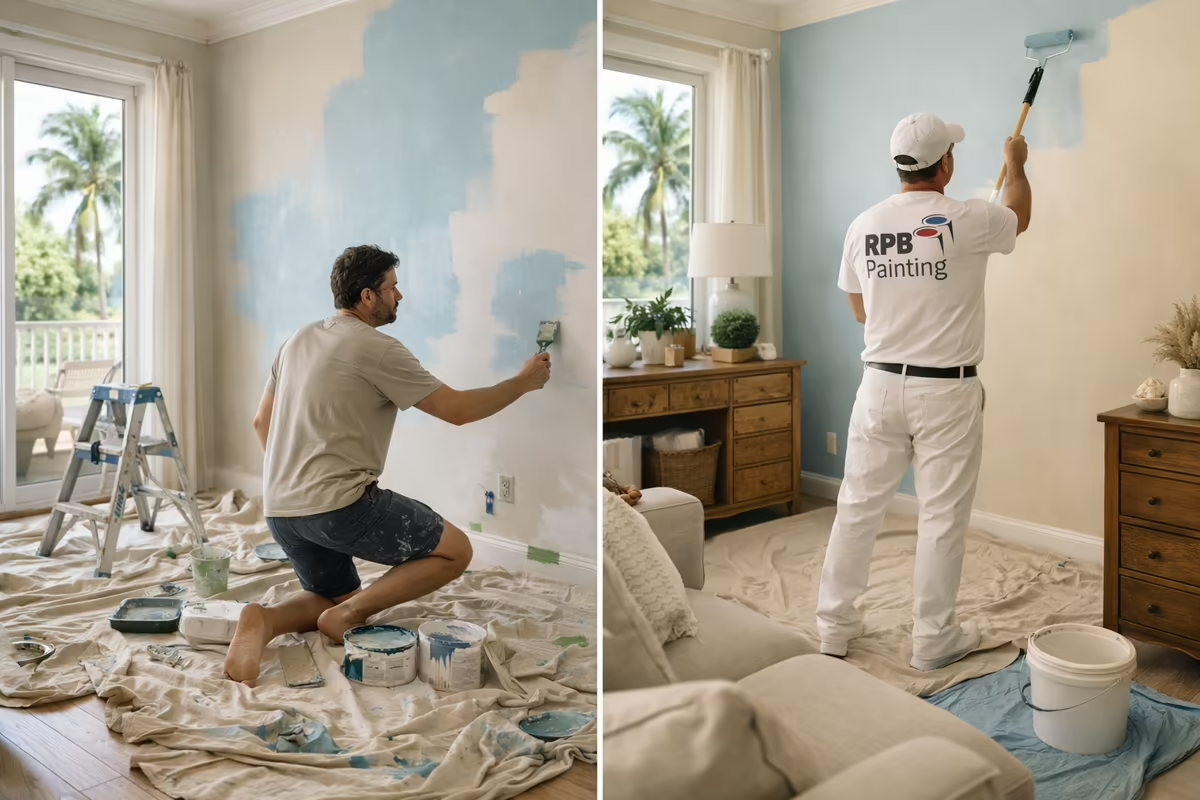
DIY makes sense for: One or two small rooms, simple accent walls, touch-up projects, and low-stakes color refreshes where you have time, basic skills, and no deadline pressure.
Hire a professional for: Whole-home repaints, all exterior projects, any work at significant height, pre-sale preparation, cabinet refinishing, homes with problem surfaces, and any project where the result genuinely matters to you.
For most Brevard County homeowners, the combination of quality outcome, time savings, and elimination of risk makes professional painting the better choice for any project beyond one or two straightforward rooms. If you are weighing the decision for a specific project, we are happy to give you a free estimate that lets you compare the actual professional cost against your DIY math, with no obligation to hire us.
For more guidance on evaluating painting contractors, see our guide on choosing the right professional painter. For full-service painting across Brevard County, explore our complete range of painting services.