A complete checklist for evaluating painting contractors in Florida, licensing, insurance, references, paint quality, prep standards, warranty, and the red flags that tell you to walk away.
Florida has thousands of painting contractors, from well-established companies with trained crews and full insurance to individuals operating without a license, insurance, or accountability. The difference between a great hire and a bad one isn't always obvious at the estimate stage. Price tells you very little. Presentation and personality don't protect you when something goes wrong.
What protects you is asking the right questions and knowing what to look for. This checklist covers everything you need to evaluate any painting contractor, whether you're hiring for an interior refresh, a full exterior repaint, or a specialty project.
1. Are They Licensed and Insured in Florida?
This is the most important question you can ask, and it's non-negotiable. Florida requires painting contractors to hold a state license issued by the Department of Business and Professional Regulation (DBPR). The license number should be on their estimate paperwork, their website, and any marketing materials.
Verify their license yourself at myfloridalicense.com, it takes less than two minutes to confirm that the license is current and in good standing. An expired or non-existent license is a hard stop.
In addition to the license, confirm that they carry:
- General liability insurance, This covers accidental damage to your property during the project. Without it, you bear the cost of any damage caused by the crew: a dropped ladder through a window, paint on your hardwood floors, damage to fixtures.
- Workers' compensation insurance, This is critical. If an unlicensed or uninsured worker is injured on your property, you can be held liable. Workers' comp protects you from that exposure. Ask for a certificate of insurance, any legitimate contractor can provide one.
RPB Painting LLC holds Florida contractor license #12-PT-CT-00057 and carries full liability and workers' compensation coverage. We provide certificates of insurance to any homeowner who requests one.
2. Can They Provide References from Similar Projects?
Ask for 3–5 references from projects similar in scope to yours, completed within the past 12 months. Actually call them. Ask:
- Did the crew arrive as scheduled and complete the project on time?
- Was the scope of work delivered as described in the written quote?
- Were there any issues, and how were they handled?
- How was the crew's communication throughout the project?
- Would you hire them again without hesitation?
Beyond direct references, check Google, Yelp, and Angi for recent reviews. Look specifically for how the contractor responds to negative reviews, a professional response to a complaint reveals more about character than a positive review does.
A contractor who hesitates to provide references, who provides names that don't respond or don't remember the project, or who has a pattern of unresolved negative reviews is waving a red flag.
3. Is the Quote Detailed and Written?
Never proceed with a painting contractor who gives you a verbal estimate or a quote so vague it's essentially meaningless ("paint 3 rooms, $900"). A professional quote should specify in writing:
- Every surface being painted (walls, ceilings, trim, doors, each itemized)
- What prep work is included (filling holes, sanding, caulking, priming)
- The specific paint brand, product line, and sheen for each surface
- The number of coats included
- The project start date and estimated completion date
- What is explicitly excluded from the scope
- Payment schedule and terms
A detailed written quote is a contract document, it protects both you and the contractor. If a contractor refuses to provide one or says "we'll figure it out as we go," walk away.
4. What Paint Brand and Product Will They Use?
The paint product matters significantly, far more than most homeowners realize. There's a genuine performance difference between a $25/gallon contractor-grade paint and a $85/gallon Benjamin Moore Aura. Both get applied by "professional painters," but one lasts 5–7 years under Florida conditions and the other lasts 10–15.
Ask specifically:
- What brand? (Benjamin Moore, Sherwin-Williams, or a generic brand?)
- What product line? (Aura, Regal Select, Emerald, Duration, or a mid-grade or low-grade formulation?)
- What finish for each surface?
A quality contractor uses quality products and is happy to tell you exactly what's going on your walls. An evasive answer ("the good paint" or "a professional-grade product") with no specifics is a concern. RPB Painting uses Benjamin Moore and Sherwin-Williams products, and we specify exactly which products in every written quote.
5. How Many Coats Are Included?
The industry standard for professional interior and exterior painting is two finish coats over primed surfaces. Some contractors bid one coat to win on price, producing thinner coverage, less consistent color, and shorter longevity.
Ask explicitly: "How many coats are included in this quote, and does that include priming where needed?" A confident, specific answer is what you want. If the answer is vague or conditional, ask them to put the coat count in the written quote.
6. Who Will Actually Do the Work?
The person who gives you the estimate may not be the person who paints your home. Some painting companies subcontract their labor, which is not inherently a problem, many subcontractors are excellent painters, but you should understand who's in your home.
Ask:
- Will the work be done by your employees or by subcontractors?
- Will there be a foreman or lead painter managing the job on site every day?
- How many people will be on site at once?
- Is the person I'm speaking with now involved in the actual painting, or only in sales?
These aren't gotcha questions, they're due diligence. Knowing who's in your home and who's accountable for quality is basic consumer protection.
7. What Is the Project Timeline?
Scheduling issues are among the most common contractor complaints. To protect yourself:
- Get a specific start date, not "sometime in the next two weeks"
- Get an estimated completion date with a range that accounts for weather (especially relevant for exterior projects in Florida's rainy season)
- Clarify whether your crew will work your project exclusively or split time between multiple jobs simultaneously
- Ask about their communication protocol for delays: who calls you, how far in advance, and what your options are
A contractor who can't provide a firm start date at the time of signing, and who becomes vague when pressed on timeline, is likely overbooked or disorganized. Either way, your project is not their priority.
8. What Is Their Warranty?
Every professional painting contractor should offer a labor warranty. This covers issues like premature peeling, cracking, or improper coverage that result from application error rather than normal wear. Standard labor warranties in the industry run 1–3 years; some premium contractors offer longer.
Ask:
- What does your warranty cover?
- What are the exclusions? (Normal wear, damage caused by the homeowner, moisture issues not related to the paint application, etc.)
- How long does the warranty last?
- What's the process if I need to make a warranty claim?
A contractor with no warranty is telling you something important: they're not confident enough in their work to stand behind it. A contractor who offers a specific, written warranty is communicating the opposite.
9. What Is the Payment Schedule?
Professional contractors do not ask for full payment upfront. The standard payment structure for painting projects is:
- 10–30% deposit upon signing the contract (covers materials procurement)
- Progress payments at defined milestones for larger projects
- Final payment upon completion and your approval of the finished work
Be cautious of any contractor requesting 50% or more upfront, or requesting cash-only payment. These payment structures eliminate your ability to withhold payment if work is incomplete or below standard. A reputable contractor earns your final payment by delivering what was agreed.
Florida-Specific Considerations
Hiring a painting contractor in Florida comes with a few state-specific considerations beyond the general checklist above:
- License verification is essential. Florida's DBPR database is public and free to search. There's no reason to take a contractor's word for their licensure, confirm it yourself.
- Workers' comp is especially important in Florida. Florida has specific workers' compensation laws that can expose homeowners to liability if an uninsured worker is injured on their property. Don't skip the insurance verification step.
- Exterior painting in Florida requires rainy season awareness. If you're planning an exterior project, ask how the contractor handles the summer rainy season (June–September). Good Florida contractors build weather windows into their scheduling and won't apply paint to wet surfaces.
- Florida's humidity affects paint performance. A contractor who applies paint in high-humidity conditions (above 85% relative humidity) or on surfaces that haven't dried properly will produce a paint job that fails prematurely. Ask about their protocols for humidity monitoring.
- Local references matter more in Florida's community markets. Brevard County, like other Florida markets, is a word-of-mouth community. A contractor with strong local references, people in your area who can speak to their experience, is more valuable than national or out-of-state credentials.
Red Flags to Walk Away From
No matter how good a contractor's pitch, these are situations where you should pause or decline:
- Cannot provide a license number or becomes defensive when asked
- Won't provide a certificate of insurance
- Quote is given entirely over the phone without seeing the project in person
- Quote is dramatically lower than every other estimate you received (this almost always means corners are being cut somewhere, prep, paint quality, coat count, or warranty)
- Refuses to provide recent local references
- Demands a large cash deposit or cash-only payment
- Won't give you a written, itemized scope of work
- Uses high-pressure tactics, "special pricing only available if you sign today"
- Shows up late or cancels the estimate appointment without proactive communication
Each of these patterns reveals something about how the contractor will behave once they have your deposit and are in your home. The estimate experience is a preview of the working relationship.
What RPB Painting Looks Like in Practice
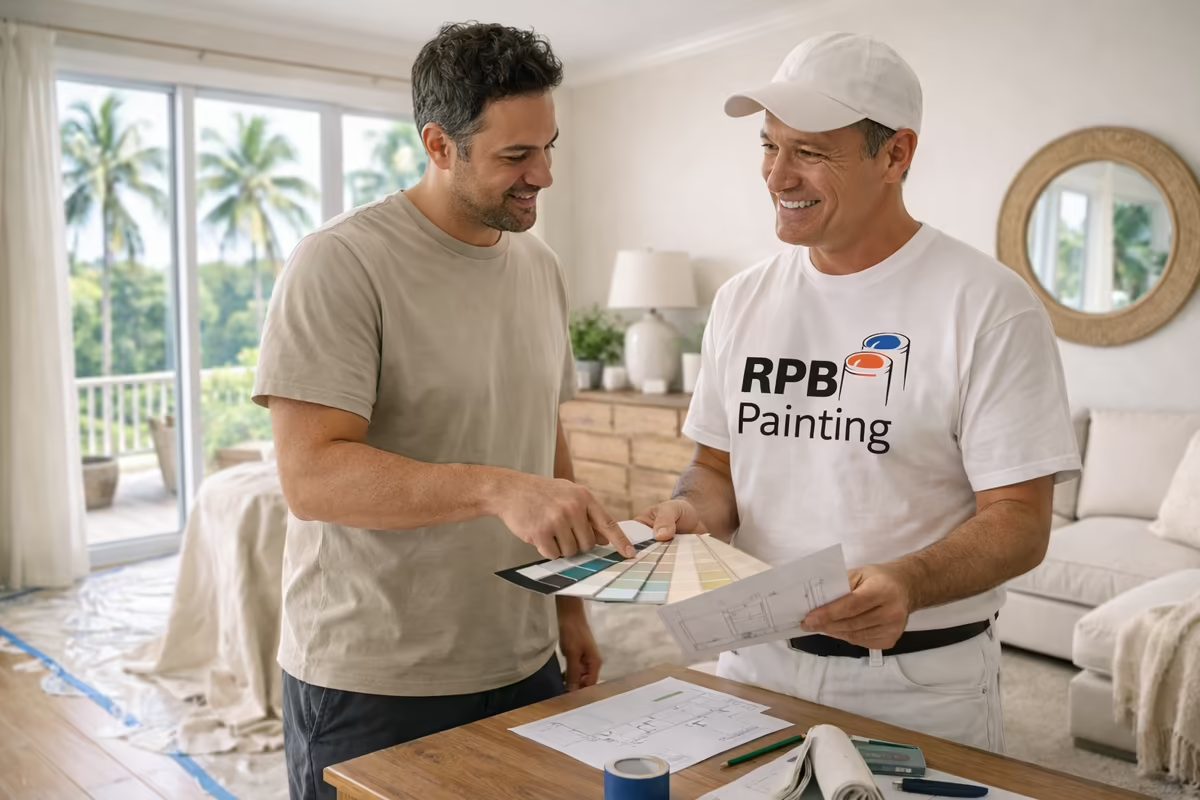
RPB Painting LLC has served Brevard County and projects across Florida since 2012. We carry Florida license #12-PT-CT-00057, full general liability insurance, and workers' compensation coverage. Every estimate is done in person, results in a written and itemized quote, and includes a pre-job walkthrough where we identify surface conditions, discuss paint products, and confirm colors before any work begins.
We stand behind our work with a written labor warranty and our final payment is always due upon your approval of the completed project.
To learn more about how we work and the values that guide our business, visit our About page. When you're ready to compare us against other contractors or simply want to start with a free estimate, contact us here, no pressure, no hard sell, just an honest assessment of your project and a clear written quote.